

The Brick Device, Reviewed By A Psychiatrist Trying to Fix Her Attention Span
How I ended up purchasing, using, and thinking about this form of reducing screentime when other methods didn't work.

First up, as any good ethical academic or clinician would do on presenting information: financial disclosures! Normalize expecting this from everyone, actually. My disclosure is that I have a referral link that saves you ten dollars and pays me ten dollars. Otherwise, this post is not sponsored (but if Brick ever would want to…you know where to find me). Secondly: I am a psychiatrist, but I am not your psychiatrist, so take this information as intended for education and entertainment purposes. Onward!
I was influenced myself right here on Substack to consider the Brick device, and for a while I dismissed it. This dismissal had little to do with the device itself, so much as it had to do with my repeated failures with trying to change my tech environment voluntarily to reduce screen time. However, either due to virtual peer pressure or by the very physicality of the device, I succumbed in September and purchased. It is, for once, one that I have not failed immediately, and for the rest of this post, I’ll give you my thoughts on why that is, with integration in my hypothesis from different psychological/therapeutic behavioral change principles. After that, I’ll give a few tips on how it works for me and tips to prevent it from becoming another failed try of GTFOff our phones.
What I’ve Failed At And Why: Flashback to January 2025 AKA The TikTok Ban Was Awesome For Me
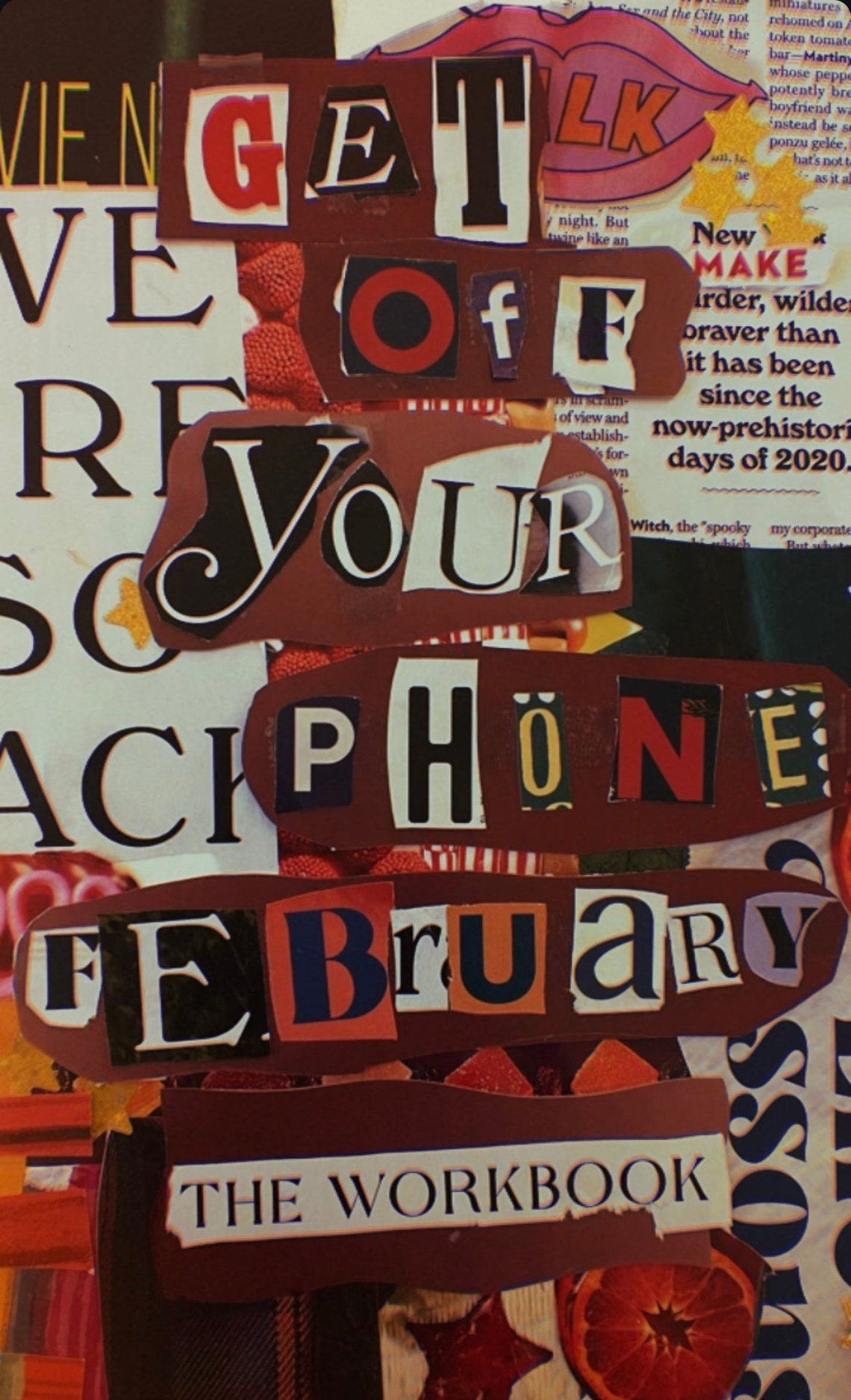
The TikTok ban. I deleted the app because I am a fool and really thought it was all over. I couldn’t redownload it until February even though it came back the next day. Surprisingly, given that my main platform is there, that time ruled for me. The time it gave back to me created the impetus to invest in Substack and start writing more regularly here. When the app became available for download again in February, there was a feeling of excitement swirled with dread. I had tried prior to the ban to regulate my use, hoping to be able to practice the ideal moderation of only 30 minutes a day of social media, and found myself to be utterly hopeless at that when left to my own devices (pun intended). Enter trials of different ways to control screen time, including my very own GTFO Your Phone February Challenge (and journal, which by the way I do still stand by all the tips in there). The problem with phone blocking apps, screentime limits, trying to leave my phone in different locations in my home, and even the journal I created was that they all depend on multiple willpower choice points. I’m most likely to want to be on social media and scroll when I’m tired, my will power is lacking, and I want to be entertained or numbed. A behavioral scheme that requires your least strong point to be the time when you have to make good choices is a behavioral scheme made to fail.
How The Brick Device Has Been Different
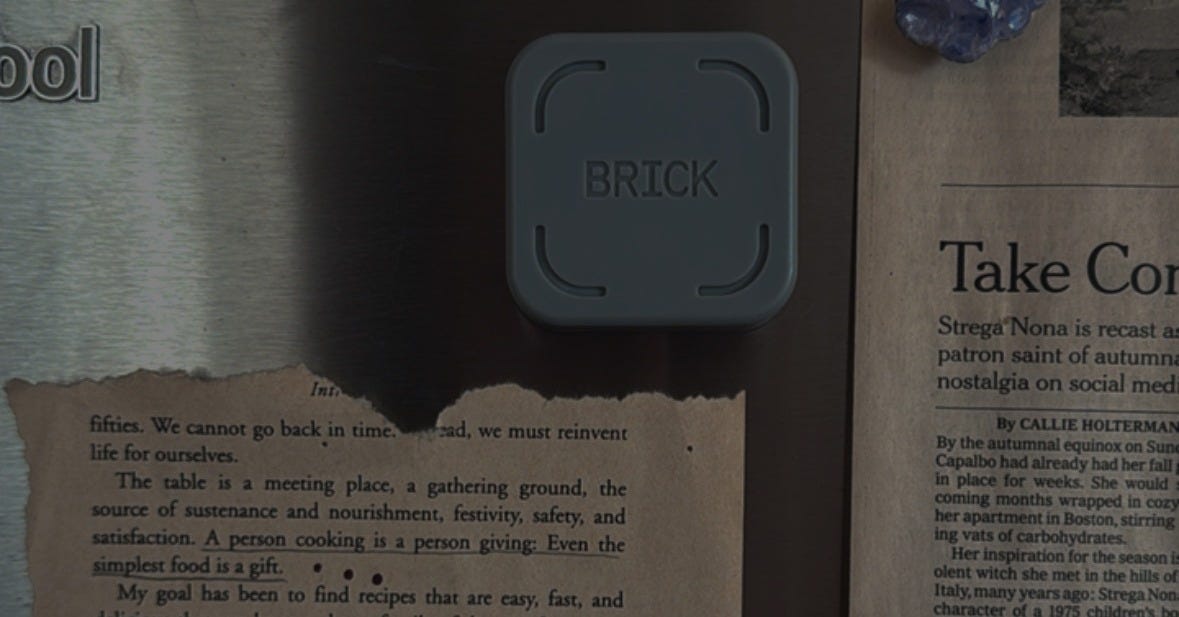
The Brick Device is a small square magnet that now lives on my refrigerator, and to use it you download an app on your phone. When your phone is on “brick” mode, the only way to unlock it is to bring it to the magnet. You can unbrick your phone through the app without the device, but only five times for the life of the brick, and then the device won’t work anymore. This limit, the physical boundary, and the numerous active bad decisions I would have to make to undo it or move the device towards breaking is what has made it so useful for me so far. Is there a way to hack it or jerry-rig it? I’m sure. But it is not so obvious as deleting apps or changing focus modes on phone, and that has made the difference.
In the app, you can make endless modes of blocking and schedules for blocking that function in some ways like the focus/do not disturb modes on the Iphone. For example, I have one that just blocks TikTok, which is the app most adept at stealing my attention and keeping me stuck. I have “90’s Rom Com Apartment”, which blocks everything except phone calls and Facetimes (because I think a Facetime is within the bounds of the spirit of the law of how a protagonist would hang out in a Nora Ephron NYC apartment in 1997). I have a “You are NOT working” mode that blocks me from checking emails or other places that social media work or clinical work can build up but do not need to be checked at 8 pm on a Sunday night.
In addition to different modes, the app has a schedule function, meaning you can set these up in advance, without having to go to your magnet and “brick it” on. These don’t end, so you have to wait until you’re by your brick to turn it off again. How I use these is that overnight, my phone goes into Brick mode, so when I wake up, I cannot scroll. Even though my coffee maker is right next to my fridge, there is something about admitting defeat/opting out that early in the day that my ego won’t allow. I also have come to know about myself that me in motion or standing is very different from me in sitting and scrolling mode. I have a hypothesis this may be true for more than me, and if this is you, I think a device like the Brick that makes you have to get up to make a choice you mostly don’t want to make is key.
Lastly, the app tracks your time spent bricked up (yes, I still think this is funny, yes at 31, yes as an academic. Sorry. Y’all SAID you want more humanity in medicine). One of the ways I find this personally and generally psychologically helpful is that it is a positive metric. Instead of looking at screentime as a metric and feeling a sense of shame for where you are at—even when you’ve been improving—following how much time your phone is on Brick mode shows you functionally the same thing but as increasing wins. I think so many people right now already feel overwhelmed, anxious, isolated, and self-critical. Shame is part of normal human emotions, and has a function12 , but when it becomes the central place we move from, it often becomes disruptive to function outside of its “normal” use without our Rolodex of emotion.
Pitfalls to Avoid This Becoming the Digital Equivalent of An Unused Gym Membership
For many people, the initial phase of anything can have more flexibility and be open to establishment of norms than once we are in routine. The first of the month, New Year’s Day, a new routine, a new school year—all of these offer an opportunity to establish how you want to behave in a new way because set routines and behaviors are not yet in place. The more new the setting or stimuli is, the more the field is open for behaving differently (more open, but not necessarily unbogged down by prior experience and learning). Getting this device is no different—the field is open, and your past experience is chomping at the bit to assert itself, but there are other choices that stand a chance to be made.
Pitfall 1: You don’t put any schedules in place, so the device becomes another thing that only works if you choose it at your low will power points.
The same problem as the prior solutions can emerge if you are going to require yourself to opt in every day. The more you don’t use it, the more you forget it is there, the more your prior behaviors generalize into this new situation.
Suggestion: When you’re getting started, beginning with a gentle schedule that challenges you 10% is a good place to start. Make it so you have to get up and opt out to not do the behavior, rather than get up and opt in.
Pitfall 2: You try to go all or nothing, and end up with a whole basket full of negative emotions or experiences you’ve been prior using your scrolling to soothe.
I tend to be a therapist of the belief that people do things for reasons, and that behavior is often rational or was functional and rational to an environment and set of stimuli at some point. If you don’t want to be on your phone as much as you are, if your phone and scrolling makes you feel bad, and you’ve tried and not been able to stop, that tells us something. The screen use may be designed to create dependence, but there is also something that may be present that the screen use helps you cope with. We don’t need to seek to eradicate this or even judge it—we just need other tools in the toolbox so that screentime doesn’t become the only way to process or soothe. The self-compassion here does bring in the fact that these apps over years and in the height of a pandemic have been made to keep your heart and attention enthralled with them, and the fact that this conversation is common means you are very much not alone in this. While the best way to work on dealing with emotions and coping differently is in a therapeutic relationship or with someone in real life who knows you well, I recognize that isn’t possible for everyone. Here is my bookshelf of books I recommend and have been helpful to me and to my learning over the years. Many of available at your public library or there are interviews with the hosts. My bookshelf at Bookshop.com is here, and disclosure is this is an affiliate link.
Suggestion: Start small (again, 10% scary is what I recommend). Consider this like you would the gym—you don’t go in and try to bench press 300 pounds. You will injure yourself, and you will avoid the gym for a long time. We want to right challenge and the right support. If your screen time has been 4 hours every night after school or work, then suddenly trying to stop is like putting yourself under that heavy bench press bar. Can you block it for 30 minutes, already set up right when you get home? Can you set up a creative hobby or plan to facetime or call someone while you cook instead of scroll? And then, can you celebrate a small win.
Note: While the concept of addiction and dopamine is vastly oversimplified on the internet and even in some books, and while I don’t know yet that I would qualify screen use as an Addiction in the same way substances are because of the differences in direct physiology, there are some parallels. The reason I bring this up is because when people come off of substances, there is often a period that we have to slowly come down because otherwise the withdrawals are either so painful or so dangerous that the majority of people will not be able to sustain it. Many of the cold turkey no social media people abound online, and that’s great if that works for them or for you. But I have a feeling you’re reading this because it didn’t, and because unlike something like cocaine, most people can’t totally go offline and live in a cabin by the sea, because tech is part of their job, their social life, their fun.
Pitfall 3: I’m off my phone…now what?
Boredom! Ennui! Anxiety that you should already have plans by now! The desire to create a project to take up time because what the hell is free time! All of these goblin thoughts will rush in when your phone isn’t rushing at you. I invite you to take a moment and breathe, and recognize that this is part of the getting off your phone process. This is maybe where the GTFO Your Phone Workbook is the most helpful, because it helps you explore how to fill your time or at least contend with it.
Suggestion: Consider making an Analog Bag, as TikTok has been talking about, before you try out the Brick Device. Prepare yourself like when you’re going somewhere without internet. There’s no honor in making something that is already challenging for you more challenging. There is a level in which our ability to have free time has atrophied due to phones (more on this soon). People talk frequently about why screentime and social media themselves are directly bad, but over time I’ve grown more concerned with how they indirectly impact the rest of our time. Am I overwhelmed because I truly don’t have time, or has my glowing device just unnecessarily sucked that time out of me without any good return? Is there so much to do an think about all the time, or is listening to 5 hours of content across platforms each day just leaving me with no space to think? The empty time will feel odd, as any new thing does. Start small, go slow, and validate when possible that it makes sense that this feels disorienting.
Let me know what questions you have in the comments, and I’ll do my best to respond to each of them as thoughtfully and cited as possible. I know this is a problem many people have, and as we go into winter and the cold, dark times of the year, over scrolling can be even harder to feel some control over.
For 10$ off, click here for my Brick referral code.
Take care & take your time,
Margaret of Bad Art Every Day
Different ways to support my publication:
Affiliate links for recommendations (Aka things I’ve loved for years)
My Book Shelf (Mental Health recommendations, feminist fitness, and my favorite fiction)
Brick Device Affiliate 10$ Off Code
Etsy Journals: Avoidance Advent, GTFO Your Phone, The Daily Seven Self Care Framework
Functional understanding of emotion regulation: https://pmc.ncbi.nlm.nih.gov/articles/PMC9453920/
https://labs.la.utexas.edu/buss/files/2013/02/Al-ShawafEmotion-Review-2015.pdf
I love my brick! I have had around three months of the phone being bricked at least 20 hours a day (messaging, maps and music apps still allowed) and it has helped so much. I schedule it to go on at 1 past midnight and do dedicated phone time before bed - not generally advisable but it works for me. I wrote a book in two of those months and strongly suspect that getting off phone all the time opened up the mental capacity and appetite for that project. I’m used to it now and don’t expect constant access to emails and browser and it’s cool! I am very pleased!
I love your schedules and their names. Do you have more that you're willing to share on here?