

Winter Blues & Light Therapy, Explained
How we treat winter mood changes and how to use Light Therapy this winter, featuring my own pick

We’ve been talking about winter and all the ways to romanticize it, but given that I am a psychiatrist1, a little general education about how we approach SAD is due at the start of winter. There is misinformation and accurate information online about mental health, but either way there is A LOT, and that can be hard to sort through when you’re not in the field, used to reading research, or hierarchies of evidence. So, grab a hot tea, and let’s discuss.
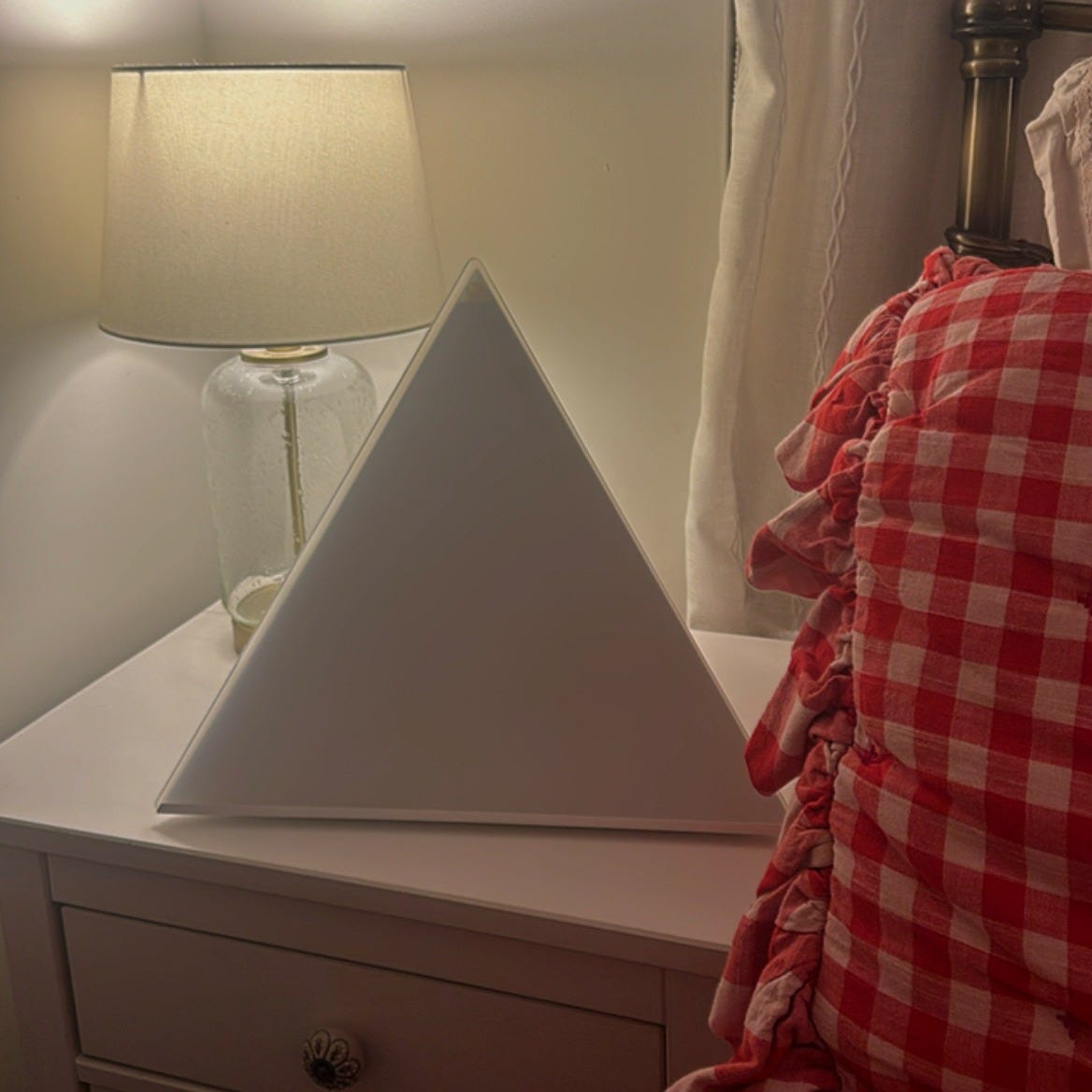
Today’s post is sponsored by my favorite brand of light therapy lamps, Northern Lights Technologies. Beyond being a small family business that has been in the industry for years, Northern Lights Technologies make light therapy lamps functional and aesthetic, making it easier to leave them out in your home and use daily. More on that below. You can check out the lamp I have and get get $20 off with purchase with my affiliate code which is, as always, BADARTEVERYDAY at checkout.
Seasonal Affective Disorder is recognized in the Diagnostic and Statistical Manual as a form of depressive disorder, and while it is thrown around online often each winter, I find most people (and in clinic, patients) often haven’t had the time with a clinician to discuss how and why winter might impact their mood, and what to do about it to help.
Seasonal Affective Disorder vs Winter Blues
In almost all of psychiatry, a disorder is when a normal emotion or human experience happens so frequently or so intensely that it disrupts day-to-day function for an ongoing period of time. For those with Seasonal Affective Disorder (or S.A.D.), what this can look like is a cluster of symptoms that usually occurs in the darkest months of the year, especially places that are far from the equator and much less sunlight per day.2 As with Major Depressive Disorder, the symptoms3 I’ll ask about for SAD are about whether for more than one winter in a row, the following have been notable:
Emotionally: Increased and persistent feelings of low mood and sadness, feelings of worthlessness or guilt. Anhedonia, aka loss of pleasure or sense of enjoyment in activities that have usually brought fulfillment. Additionally, this is where I might ask about thoughts of self-harm or wanting to no longer be alive or of hopelessness.
Cognitively, concentration can be more difficult.
Physically, change in sleep with either sleeping more or sleeping less, and decrease in energy even when enough hours of sleep are occurring. Physical restlessness or feeling slowed down, almost like you’re moving as “heavy as lead”. Increased appetite or decreased appetite, sometimes an increased appetite for or craving for carbohydrate foods
These are the usual symptoms in depression. When it is only happening during a certain season and happens more than one year in a row, and is much less present or completely absent during the other months of the year, the diagnosis made is S.A.D.
Winter blues is more of a colloquial term, and while it can include SAD, it has more come to mean normative changes that might happen to mental wellbeing due to the change in daylight, temperature, and behaviors that occur during winter months. This could have something in common with the symptoms above, but it may not last the whole season, may not get in the way of day to day life, or may be related more to a change that occurs within winter itself (ie, you can’t go running anymore because of ice, and you used to love running daily with a friend) but aren’t necessarily part of the changes in light nor changes in your circadian rhythm.
The neurobiology of SAD is complex, and still under investigation as the science advances in understanding complex interactions between environment, sleep, and physiology of mood and cognition. One recognized mechanism in the literature is that lack of sunlight in the winter increases the presence of a transport protein. With decreased sunlight, there is increased transport of serotonin out of the space between neurons, which makes its cascade less available, and thus is correlated with lower mood. 4
Another mechanism thought to be related to increased fatigue in winter and SAD specifically is increased production of melatonin with increased darkness. The pineal gland is a component of the nervous system that assists in regulation of sleepiness, and when there is darkness, the pineal gland produces melatonin.
The downstream of effect from both of these mechanisms leads to disruption in sleep (which also happens in non-seasonally mediated depressive disorders) which further worsens mood and fatigue.
Vitamin D from decreased sun exposure is an additional discussed component, but I won’t belabor that here. If you are spending time outside still in winter, this may not be as much of an issue, but as always, speak to a clinician on any of this for clinical guidance. Vitamin D supplementation can be useful for some in winter, but it seems online many people are recommending starting it regardless of getting labs or symptoms, which may or may not be a useful recommendation (though I tend to think broad internet suggestions for interventions aren’t usually nuanced enough to help or be appropriate).
How We Treat Seasonal Affective Disorder
Like many diagnoses in psychiatry, we have a few different evidence-based routes to help treat seasonal depression, and what we end up choosing often has to do with the unique set of preferences, side effect profiles, and life style choices an individual has. The main options per the literature at present are light therapy, talk therapy, and medication. A work up by a clinician will also include asking about your whole body health, nutrition, and other symptoms to rule out other factors or underlying causes.
Light Therapy: As you might guess from this post’s partnership, light therapy is one of the most accessible pillars of approaches to treatment for SAD, and is often one that can be used alongside other modalities if needed. Light therapy helps to increase exposure to rays of light similar to daylight, and can be especially helpful if done in the morning to mimic natural early in the day sun exposure that can help energize us.
Note: Similar to antidepressants, those with concern for depression that is a part of bipolar spectrum disorder (ie a psychiatric illness that includes hypomania or mania, sleep disruption, and changes in behavior in addition to depressive symptoms) should speak to a clinician before thinking about starting light therapy, as there is a risk light therapy may precipitate a manic episode.
Medication is often the option we will use in cases where someone presents with moderate-to-severe symptoms from the list above, especially if safety concerns are present. Part of the reason this happens is that we know it can help pretty dependably in a timely fashion especially for severe depressive symptoms. Starting with medications does not mean precluding the other forms of treatment, and vice versa. Often, I try to help my patients not moralize which treatment is superior in trying—many people can have a stigma towards their own mental health that views medication as a sort of “shortcut” rather than a brilliant invention that can improve lives and get people back to who they are and the work they want to be doing in the world.
The common medication used for this are SSRI’s, which are selective serotonin reuptake inhibitors, aka the most common modern form of antidepressant used as they have much better side effect profiles compared to older antidepressants (aka TCAs, MAO-i’s) (though we do use those still at times in the right cases and can be hugely helpful!). We also at times may use Wellbutrin, which has a somewhat different mechanism, similar to how we use it in depression.
Therapy, particularly Cognitive Behavioral Therapy (CBT), can be hugely helpful for treatment of seasonal affective disorder. Common parts of CBT that may be used to help those who suffer yearly with change in mood are psychoeducation around how SAD works, increasing awareness of impact of SAD on one’s thoughts, behaviors, and mood states, and creating “behavioral activation” plans to approach the emotional, physical, and cognitive changes that SAD can bring in different, more effective ways.
Anecdotally, for those who may be more isolated during winter and that behavioral component is part of their SAD, I find therapy can be a good place to start if it can be started in a timely fashion.
In terms of recommendations, as always, speak to your clinician. Transparently, most of the time the choice of how to best proceed depends so much on a person’s clinical history, co-occurring illness, preferences for treatment (effect onset, ability to maintain, cost, desire for medication vs not using medication etc, safety concerns).
If you’d like an additional deep dive into this topic, you can check out the episode we did on winter mental health here.
How I Recommend Using A Light Therapy Lamp
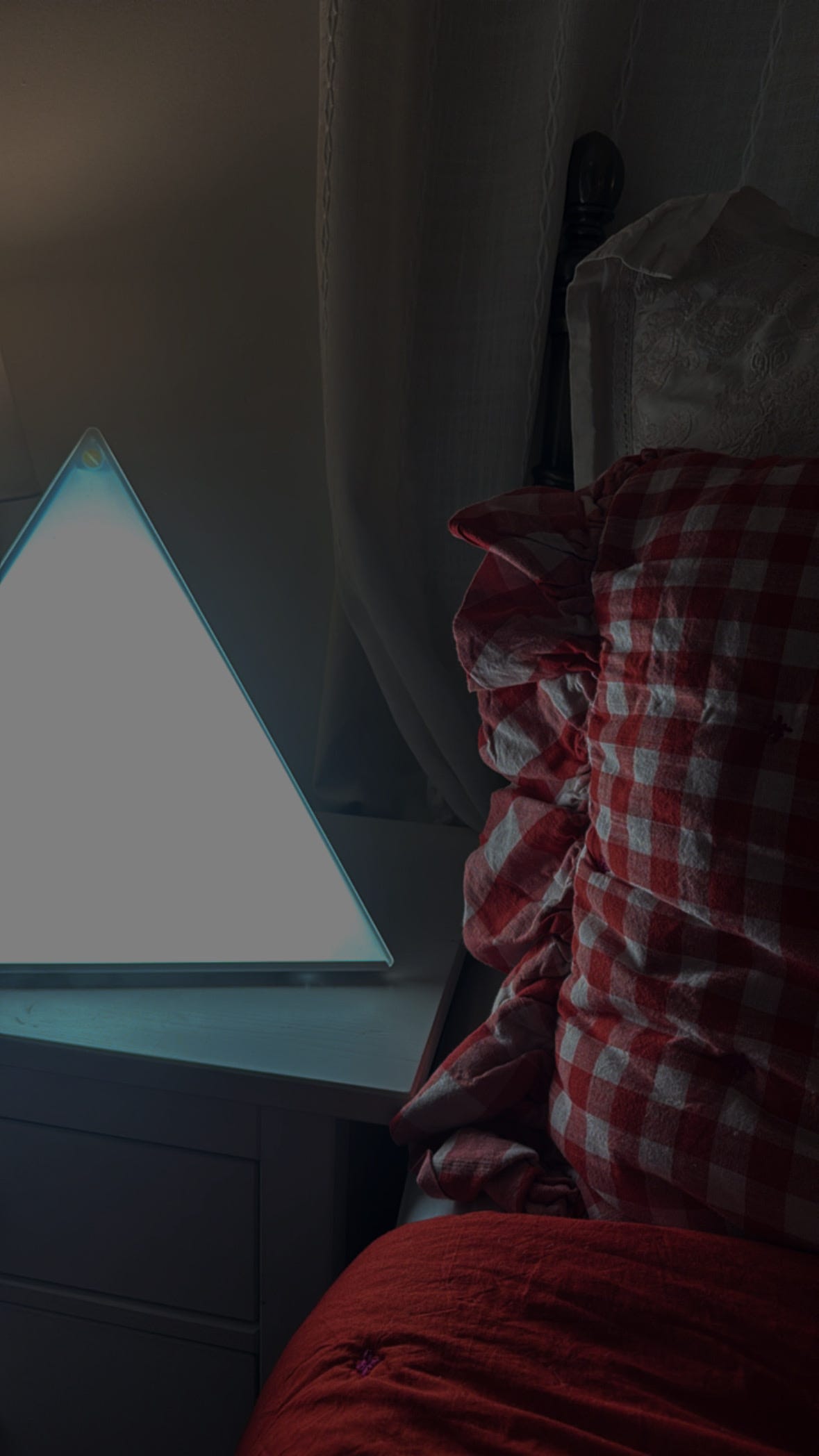
First up, I have loved my light therapy lamp from Northern Lights Technologies for a few reasons. One, it’s aesthetically pleasing. This may seem unimportant to some, but I think those who read this and follow me care quite a bit about the beauty of every day, routine life. In the case of this lamp, the form serves the function: it’s beautifully designed, and therefore I don’t mind it being on display, and therefore there is very little barrier to use. I’ve got mine on my nightstand for cozy coffee drinking and morning reading with the light nearby for 20 minutes, but you could put it by where you dry your hair or do your work in work from home.
A few other things about optimizing this routine. Because the lamp is meant to help the body mimic the wake-sleep cycle from daylight during longer days of the year, it is best to use it in the first hour of the morning. One, this will help you wake up and it will be easier to be regular with if you tie it to your morning routine. Two, this helps start the internal clock that your body might otherwise not get until later in the day (or not at all, if it is frigid and you work mostly indoors). I would not recommend using this at night as it can be wakefulness promoting, which is usually not what you want at 10:30 pm. Am I intrigued by this and considering using it if I ever work night shift again? Maybe.
Ultimately, the causes of both mild winter blues to severe Seasonal Affective Disorder are multifactorial, and include lots of the lifestyle components we’ve been talking about in addition to the body-environment regulation mediated by weather and sunlight hours. Despite this, we have many options to help make winter much easier, and to support those who dread this season.
If you’re interested in your own aesthetic Light Therapy Lamp, you can check out Northern Lights Technologies and the one I own here, and get $20 off with my affiliate code BADARTEVERYDAY. Thanks again to Northern Lights Technology for making this post possible and bringing a little light into a dark New England winter.
Let me know what questions you have, and I hope you’re holding up so far this winter season.
Take care and take your time,
Margaret of Bad Art Every Day
I am a psychiatrist, but I am not YOUR psychiatrist dear reader, and all of this information in this sponsored post should be taken not as direct or clinical health advice, but as health education and entertainment. For questions about your own mental health, it is always best to speak to your clinician and care team in real life to make sure recommendations are specific and take your whole life picture and health background into account.
There is an emerging question whether there may be a type of seasonal affective disorder that occurs in hot summer months with long days and excess light, and whether there may be shared or intertwined mechanisms for how a body responds to extremes on either end of the temperature and day length spectrum.
https://www.psychiatry.org/patients-families/seasonal-affective-disorder
Melrose S. Seasonal Affective Disorder: An Overview of Assessment and Treatment Approaches. Depress Res Treat. 2015;2015:178564. doi: 10.1155/2015/178564. Epub 2015 Nov 25. PMID: 26688752; PMCID: PMC4673349.
Just what I needed to hear today. Thank you!
Super useful, especially after moving to Sweden!