

If Men Were Offered An Effective Medication and Women Were Only Offered Placebo, We Would Be Angry. So Why Aren't We with Exercise?
A cited article on the rising resurgence of Barre, cortisol myths, and extremes in marketing towards women's workouts

Imagine you are quite ill. You have symptoms that are severe—pain throughout the spine, fatigue, insomnia, depression, worsening organ function—and finally, after being on a wait list for a long time, you go to the doctor’s office. At your appointment, she works you up, and makes a clear diagnosis of Illness Z. She states that there is a mediation which can help, but only helps reduce symptoms by about 20%, with symptoms remaining for many women. Grateful for her help, though feeling a bit of despair at the best treatment, you decide together to start the medication, and book a follow up.
Now imagine you return home, and later that day talk to your brother on the phone. He has known about your history of symptoms, as he has almost exactly the same ones. On hearing there can be some help, he goes to his doctor. You later learn, a few weeks later, that his doctor offered him a different medication, and when you look it up, you realize this medication treats 90% of symptoms, and men who take it often go into remission. However, that’s the problem: only men are allowed to take it, stating that if women take it, they may appear a bit more boy-ish.
You would be aghast. You would be angry. You would slam your fists, and maybe even try some of the medication from your brother or off a black market. You would be rightfully reacting to what is happening, and it would be unjust.
Yet, when we talk about women’s exercise and fitness recommendations, we are okay with getting the less effective medicine, and we shouldn’t be.
Cortisol and the return of the Frailty Myth
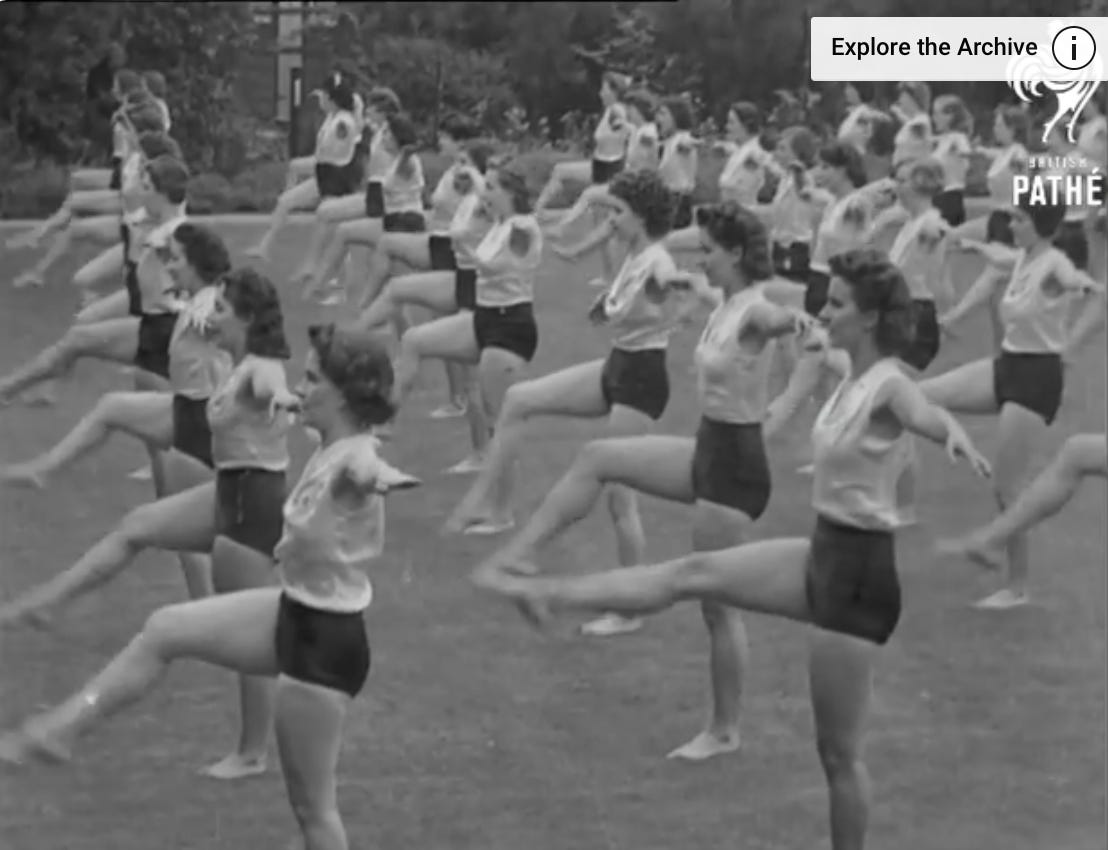
As women, we haven’t been able to workout for that long. In recently reading the very excellent book, Let’s Get Physical: How Women Discovered Exercise and Changed The World, the author Danielle Friedman explores the history of women’s relationships to their bodies, movement, and exertion. Up until and, quite frankly, through the 1970s, there persisted an idea not JUST that women were weaker and less able to play “boy’s sports”, but more specifically that women’s bodies and, of course, their fertility, would be dangerously interfered with if they exercised. This included everything from running to lifting weights. Guess what was allowed in that time? Something that looked an awful lot like what I see on my TikTok feed, often with the hashtag, “#lowimpact #hormonebalancing”. Take a gander, for example, at this exercise class from 1941 in Britain (which, by the way, was a little more free than the 50s, when women were moved back to homes and fear of women having been “masculinized” by their work during the war increasingly led to stricter views of femininity).
In an interview with The Guardian1, around the time of 2000 olympics, Colette Dowling, the writer of the book The Frailty Myth, defined this attitude towards women’s bodies as thus:
"Women have been excluded from so much in life because of the frailty myth," she writes. "First we believed we were weak. Then we began to suspect that we weren't but kept getting told that we were. Then we began proving that we weren't and were mocked as men because we were strong.”
Colette Dowling
Myths that persisted into the 1950s were such that physical exertion or stress would literally cause a woman’s uterus to “fall out.” Historically, women were at first told they could not complete strength, power, or endurance tasks (like running marathons), and after that was proven incorrect, they were warned that it was against the nature of good women to pursue something so aggressive. It would threaten not just their perceived attractiveness, but would make them infertile.
This brings me to today. It does not feel like a leap to connect our past battle with the idea of weakness as womanly with rising rhetoric about Pilates and barre, low-impact exercise, and avoiding “stressful” intense workouts due to “cortisol spikes”.
Here is where I add a caveat: I enjoy Pilates, I enjoy long walks, I enjoy barre. I am glad that women are being taught to allow rest, movement for fun, and to move more. Moving more is usually better than moving not at all. Life isn’t an optimization exercise. With all that being said, women are still not being taught what exercise can and does do for them, and what might be most useful to their own values, vs. “gentle and feminine” as portrayed by the lithe, ballet-esque aesthetic of the wellness queens online. Mikala Jamison of Body Type here on Substack wrote extremely lucidly about this in the Pilates frame2, writing:
“This post isn’t a takedown of Pilates Thee Exercise. It’s a critique of the commercial, social, and lifestyle aspects that have developed around Pilates that have potentially damaging implications for women’s ideas of what exercise is for and what it can do for them.OK? We good? Are the Pilates girlies still with us? Brace your core, let’s get into it.”
Mikayla Jamison
What Exercise Can and Cannot Reliably Accomplish
I’m going to try to simplify this, as we could quite literally discuss this ad infinitum (which I enjoy, so let me know in the comments if anyone else is into reading primary exercise literature). When we think about workouts of any sort, we should always start with a basic question: Why am I doing this? We can ask this with a kind and curious neutrality to ourselves.
Answers may be: to look good. To learn a skill. To meet new friends. To have fun. To gain muscle. To help my focus. To help my depression. To help prevent Diabetes. To help prevent cancer. To slim down. To look more like XYZ celebrity. To be able to do a cool trick. To help my heart health. To help me sleep. To help me not feel constantly sleepy. And on and on and on…
When we ask just ourselves, directly, why we are exercising, it may be something we haven’t explored before. One of the ways the wellness industry works is by vague allusions and making the feeling they elicit in you strong without having to make concrete, provable claims. They show you an image of a slender, energetic woman pulsing around at the barre studio with friends, and then a picture of her abs, with a caption, “Strength is sexy!!!” They quote pseudoscience, or reference how it’s related to something like ballet, a dancer’s body, or balanced hormones. It’s not a scientific journal club—it’s an ad. They never concretely say how this exercise helps, or the evidence for it. Marketing incites a feeling, and the sense of belonging, moderate physical benefit, and images keep you coming back.
If you know what you value or what you’re hoping to get from exercise, you start the path of being an informed consumer and mover of your body. For example, if you’re hoping to get stronger, then you need to move a force that challenges your muscle, almost to the point at a certain number of reps where you can barely lift or move it again, and this needs to happen in about 60 seconds or less. Tiny pulses don’t help build muscle after the initial couple of months (when they can, especially if you’re just starting to exercise!), which is why things like barre and Pilates, including reformer Pilates, are limited in building strength. Similar in their inability to adequately challenge muscle in a short enough period, they are generally not a recommended option for building bone3 health, something that matters increasingly as women age and become higher risk for osteopenia or osteoporosis.
Exercise can build muscle and can help with bone mineralization/strength, but it has to be almost exactly the opposite of what the hormone-balance coaches are telling you. In the excellent research done on older women who already have bone health concerns, the LIFTMOR Randomized Control Trial (2017) had postmenopausal women (average age: 65) with low bone mass assigned to High-intensity, progressive resistance and impact weight-bearing training (HiRIT) for 30 minutes twice a week for 8 months OR low-resistance low-impact training for 30 minutes twice a week for 8 months. The low-resistance and low-impact training had a walking warm up, 0-up to 3 kg weights only, and then stretching…does this remind you of any other type of workout? Meanwhile, here are the ladies in the HiRIT intervention:
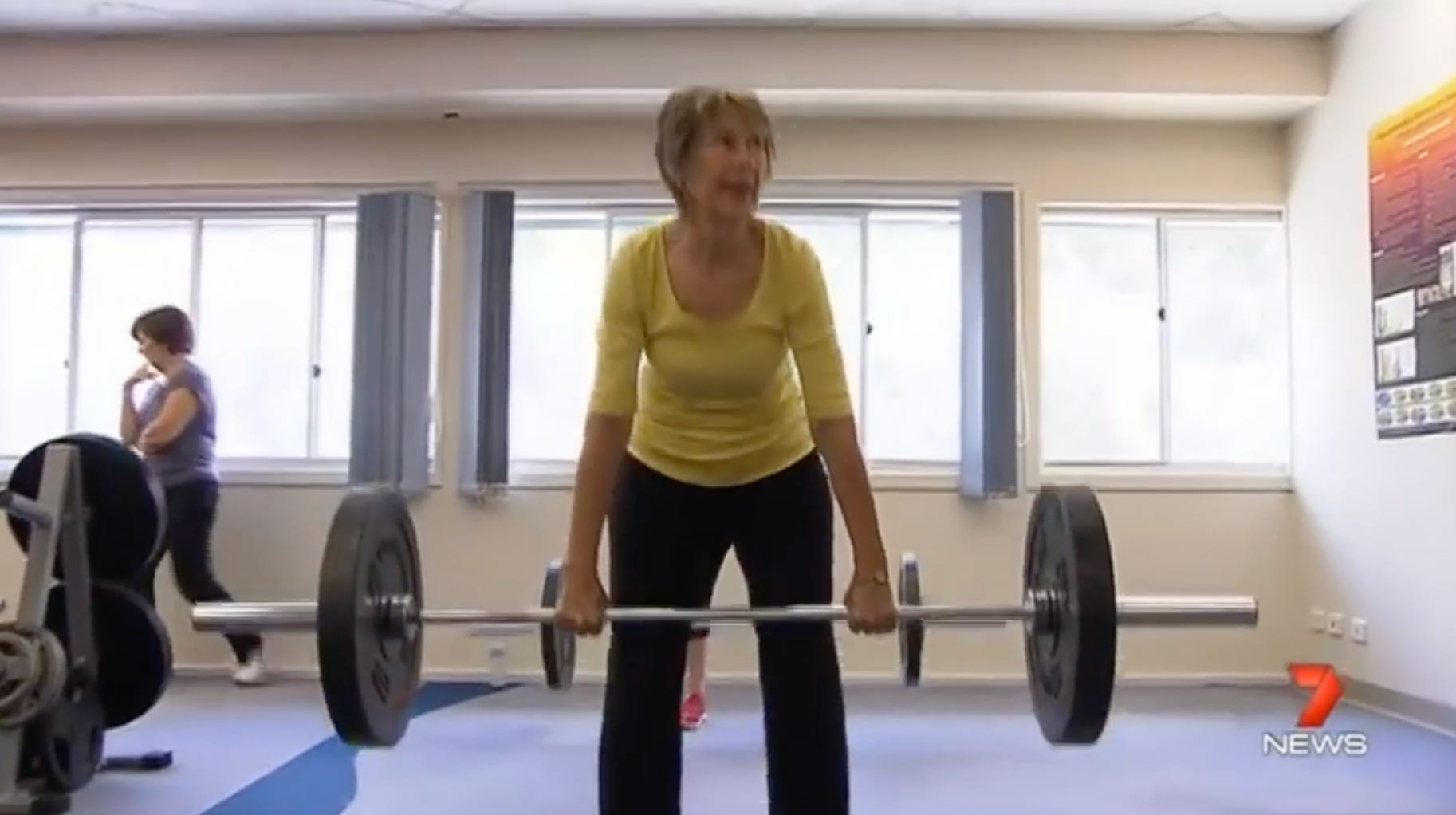
The study showed both safety and significant impact (Statistically and clinically) on these women’s bone and performance health4. They proved a new frailty myth wrong, as well: that older folks with changes or deterioration in joints couldn’t safely do an intense resistance/impact program. So if you want to get stronger, build muscle, and most difficult of all, build bone, lifting heavier and doing higher impact exercise, graded correctly to your ability level, is the thing to do.
Let’s add a bit more meat to that bone (sorry, bad pun). If you want to build muscle, you want to recruit all of a muscle, and to do that better, you need to lift heavier and closer to failure, which recruits more Type 2 muscle fiber (in addition to the more endurance-associated type 1). Type 2 muscle fibers are more impactful overall on increasing strength, power, and muscle size. In Barre and Pilates, where you do a body weight exercise series that hits the same muscle over and over for minutes on end, your type 2 muscle fibers are not adequately recruited, as over 60 seconds, your type 1 fibers “recycle” and become usable again in the muscle. The “burn” and “shake” can happen in this setting in Barre and Pilates, but those sensations are more associated with fatigue and local-to-muscle anaerobic metabolism than they are to outcomes that matter to most people (ie building muscle size, strength, etc).
If you care about your cardiac health or cardiopulmonary system as a whole, then repetitive aerobic exercise, rather than light resistance, non-repetitive exercise is likely optimal for the heart. We want cardio workouts to improve our cardio system, therefore if the workouts are limited by how strong your shoulders are in a plank, or how strong your quads are, you aren't adequately challenging your heart, lungs, and vascular capacities.
From a mental health perspective, Pilates, yoga, barre, or other low impact “mind-body” activities have been shown time and again to be quite good for you. There can be some strength gained, and endurance of muscle also built up. The group element of these types of classes also bring a specific benefit to your overall, holistic wellbeing. The safety of mostly-female spaces also is something to think about when thinking about how you want your workout to feel and what holistic wellbeing means to you.
Two other quick myths to bust before we bring it home:
“Tiny muscles” work at joints in combination with larger muscle groups, and specific exercises likely aren’t needed to strengthen them.
Exercise is part of weight loss maintenance, and very good for overall health, but weight loss is minimally driven by physical activity.5
What to do with this information
In writing this piece, I am most certainly not trying to further the idea you must work out perfectly. I don’t, I don’t want to, and I don’t recommend it. But similar to misinformation about quickly spreading rumors of dangers of certain foods like pasteurized milk, misinformation about exercise has been the rule, not the exception, thus far in women’s history. I’m tired of the Beauty Industrial Complex profiting off of this. Getting very into this science over the past two years has changed my life and relationship with both my body and exercise for the better. Ever since I started to have low grade low back pain daily a few years ago, I began asking more deeply what I could do via exercise to help this. What I’ve learned since then has radicalized me.
My hope is to help provide a glimpse at the science of wellness, that influencers, supplement companies, and workout classes allude to but very rarely deeply explore, and depend on you not being able to understand or have access to the data that they base their claims upon.
I want you to know what I know, in the same way I would want you to know how to use a wrench vs a hammer if I was teaching you to build something. Different movement styles are all good for us compared to sedentary behavior habits, and that’s the first thing. The second thing is choosing what to put into your weekly life, based on what you want in your life. Part of embodied liberation for women is the ability to have just as much science-backed understanding of our bodies and ourselves as men do.
I am not writing about these wellness topics because are think they are inherently silly, bad, or cannot help anyone. If walking 10k steps a day has worked for you and improved your life, that’ great! Keep doing it! If thinking about cortisol has given you a path to value a calmer life and give yourself permission to rest more, GOOD! If barre got you to your first pushup, that is amazing, and I myself have a similar story. The world of exercise is wide and exciting, and I want you to have the full spectrum of benefit and fun from it. God knows it’s time we finally had access to the world of play that lies before us.
Krum, Sharon. “Fighting Back”, The Guardian, 2000. https://www.theguardian.com/books/2000/aug/22/booksonhealth.lifeandhealth

Fernández-Rodríguez R, Alvarez-Bueno C, Reina-Gutiérrez S, Torres-Costoso A, Nuñez de Arenas-Arroyo S, Martínez-Vizcaíno V. Effectiveness of Pilates and Yoga to improve bone density in adult women: A systematic review and meta-analysis. PLoS One. 2021 May 7;16(5):e0251391. doi: 10.1371/journal.pone.0251391. PMID: 33961670; PMCID: PMC8104420.
Watson SL, Weeks BK, Weis LJ, Harding AT, Horan SA, Beck BR. High-Intensity Resistance and Impact Training Improves Bone Mineral Density and Physical Function in Postmenopausal Women With Osteopenia and Osteoporosis: The LIFTMOR Randomized Controlled Trial. J Bone Miner Res. 2018 Feb;33(2):211-220. doi: 10.1002/jbmr.3284. Epub 2017 Oct 4. Erratum in: J Bone Miner Res. 2019 Mar;34(3):572. doi: 10.1002/jbmr.3659. PMID: 28975661.
Franz MJ, VanWormer JJ, Crain AL, Boucher JL, Histon T, Caplan W, Bowman JD, Pronk NP. Weight-loss outcomes: a systematic review and meta-analysis of weight-loss clinical trials with a minimum 1-year follow-up. J Am Diet Assoc. 2007 Oct;107(10):1755-67. doi: 10.1016/j.jada.2007.07.017. PMID: 17904936.
I keep thinking too about the time factor: So many women have written about being "golf widows" or "marathon widows" or "gym widows" because they have to stay at home and take care of everything so their husbands have the freedom to spend hours every week pursuing their physical hobbies and workout perfection (https://www.bustle.com/life/marathon-spouses-relationships, that TikTok of a mom finishing a race and her husband thrusting their kids at her, etc)
The barrier to entry for more intense working out is high and made higher by demands on women's time, especially when they're partnered and mothers.
I strongly agree that women should lift weights and lift heavy. I also agree that Pilates and walking only is insufficient, and that there is a lot of misinformation around female fitness online.
However, I think your comparison/metaphor at the beginning about a doctor prescribing different medications is misleading. Actual doctors do not prescribe different exercises based on sex. The world health organization does not have separate recommendations for men and women. They specifically say that muscle building exercises benefit everyone.
So Instagram influencers say this crap, but medical bodies do not. Which doesn't mean it's not a problem but I think it's a different kind of problem, and it's a bit disingenuous to conflate the two.