

Things I Had Feelings About This Week, Vol. 1
As a psychiatrist in training in women's mental health, pop culture-ish writer, and podcaster (sinisterly multi-hyphenate at this point)

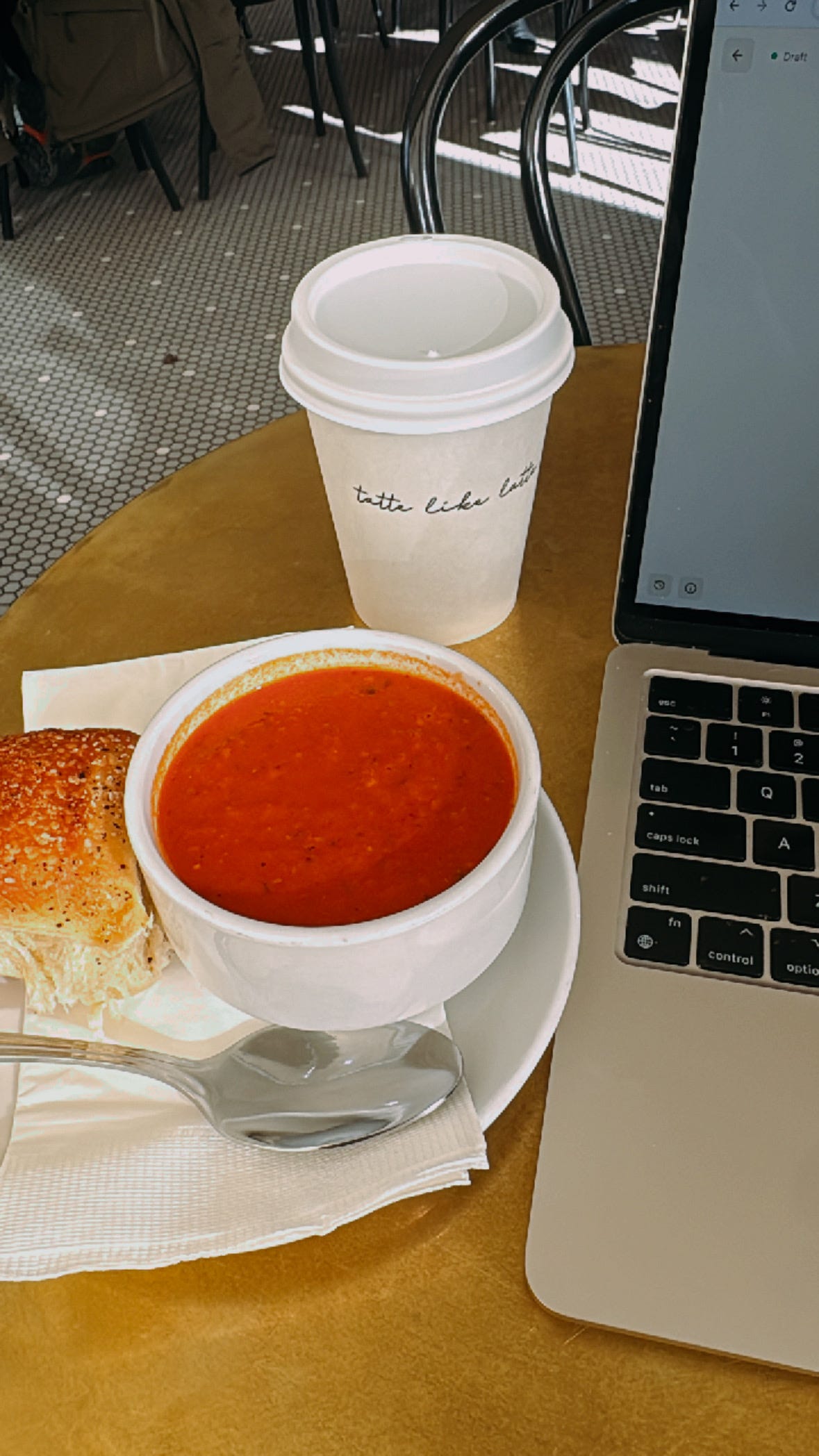
Hello, my dear long form readers. I hope this newsletter finds you somewhere calm, safe, and with something soothing to drink. It’s currently 30 degrees in Boston, and I am having my favorite tomato-basil soup from Tatte as I write this.
My day job is being a psychiatry resident, and during my four years of residency, I’ve been writing for fun on TikTok on how to romanticize and change small things of our daily lives. From your perspective, this may have seemed like its own thing, as I didn’t talk about my clinical work very often. From my end, they have always been deeply intertwined. What I thought and learned about during my lectures and clinical work has been the soil my writing grows from. Whether that writing is fiction or creative ways to view daily life, my life as a psychiatry trainee influenced it. Likewise, what I see and consume on social media and in physical media becomes the flavor of the metaphors I’m using that week in clinic. My thought has been always that we don’t just exist in one context—we inhabit many places and can call all of them home.
Here is the first volume of things I’ve been thinking about, in both of my jobs in physical life and virtual life. Because our podcast, How to Be Patient, launched this week, those two lives of mine are becoming more integrated. I thought sharing what I get to see being in these two niche worlds might be of interest what I like to think my ideal readers are: smart with a sense of humor, direct but with a capacity for nuance, and voracious in their use of metaphor.
Does the Menstrual Cycle change how women move and exercise?
I am working on a longer, dedicated Evidence-Based Wellness article on this topic, as well as on cortisol, but am currently diving into the complexity of the “cycle syncing” trend in the wellness world. I think there is something at the center of this trend that is beautiful and very much needed: It gives women a way to relate to their bodies and periods in a non-shaming way, and it teaches them that listening to their body might be a valuable and allowable practice. This is vastly different from the on-again, off-again trend of intense exercise culture, and in that culture you can include whatever exercise practice or setting aligns with a philosophy that would have you make sense of the painful or overwhelming sensation in your body only as something to be pushed through.
On the other hand, cycle syncing aligns with a broader array of “woman-centered” wellness that promotes itself as both feminine and feminist, in that it knows “women are not just little men.” This problem exists, at least historically: It was not uncommon for menstruating-years women (ie when hormonal complexity exists, compared to post menopause when there is not the same cyclical change over a month) to be excluded or ignored in the health research world. Cycle syncing also does not have a solid foundation of research to support it, and when it gets to the extent that it limits how women move, and gives women another set of rigid rules for the right way to move or be in a menstruating body, it becomes a cage.
I’m trying to be thoughtful with this topic, as I think it offers both good and bad. When I think about writing or speaking online and in public, it’s to ask who may read this and where is the place they may be reading it from, psychologically. Ethically, you want accurate information to get to people, and that may mean using a headline that is purposefully slightly inflammatory. However, it could also discourage women from having a more compassionate relationship to their bodies that the method is helping them cultivate. Which has greater benefit? Which has greater harm?
I’m not sure yet. Either way, one of the papers I’m currently reading is this review here: The Effects of Menstrual Cycle Phase on Eumenorrheic Women.
What it meant to “be girls together” on Tik Tok over the last few years
As many of you readers came from TikTok, you may have seen this video I posted, and we have been talking about it in the chat here on Substack. It has gone relatively viral, and what I’ve been thinking about is the comment section for that video. Each day, more and more girls and women from all walks of life are commenting about how the change in how we view traditionally “girl” things and how we speak to each other has changed for them because of community on Tik Tok. A number of folks talked about their experience being pregnant, postpartum, in motherhood, or dealing with caring or illness and how the app allowed them a way to connect and feel seen when it otherwise would not have been possible. There is a real grieving felt in the comments, talking about the beauty and connection we were able to feel to one another and then feel out in the world off the app since we knew there were others who felt the same way.
If instagram taught us how to objectify ourselves for on the online gaze, Tik Tok at its best moments taught us how to step back into personhood, together.
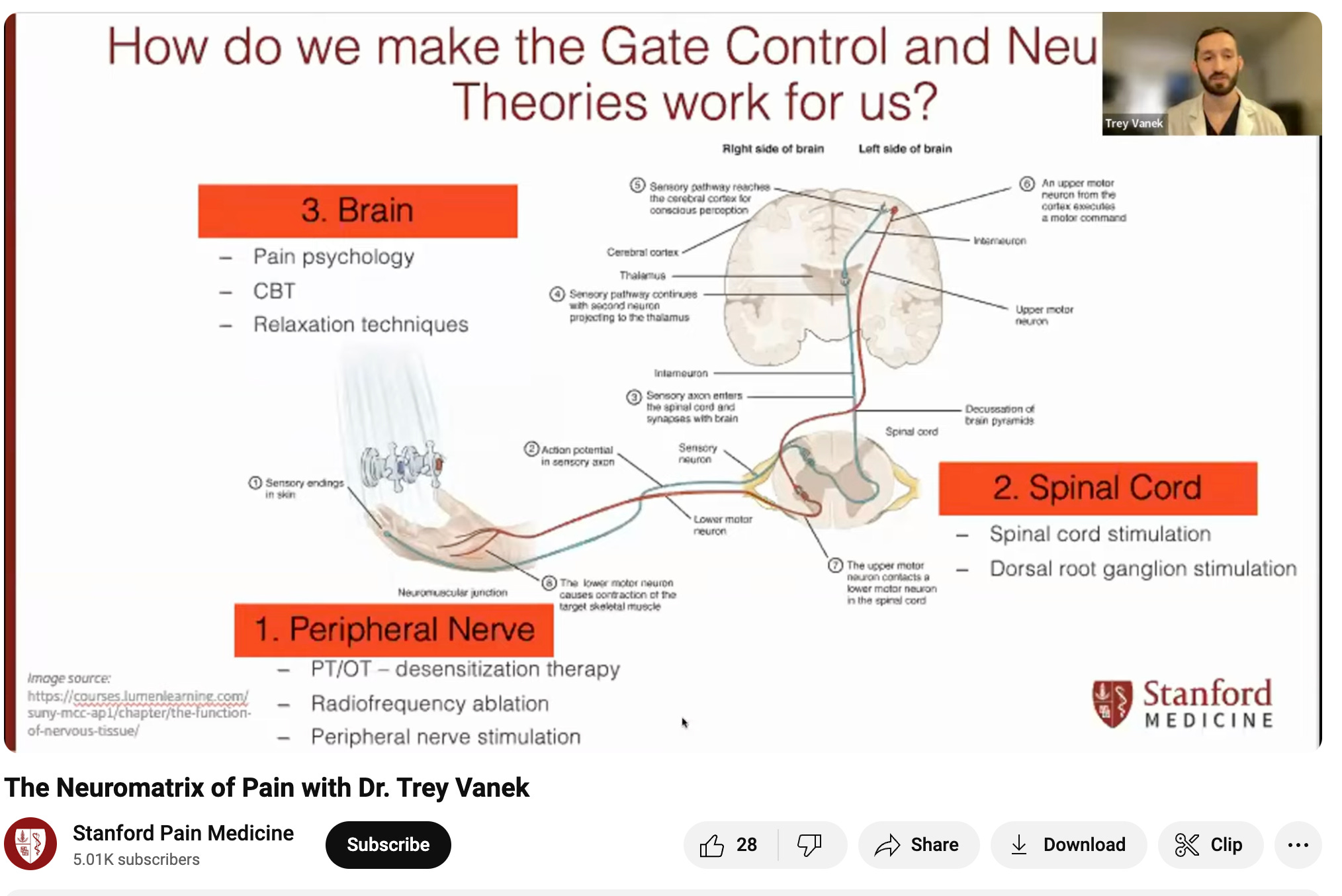
Understanding Chronic Pain: The Neuromatrix, A lecture from Stanford Chronic Pain Group
One of my favorite parts of doing a mental health/psychiatry podcast is it gives me one topic to review, read on, and find lectures about each week. The world of healthcare and mental health is fascinating and endless, but because its so broad, it can feel overwhelming on where to start when you’re trying to continue to learn as a doctor in training (and, frankly, post-training). The episode we are preparing to do is on approaches to helping people with chronic pain. There are poetry, memoir, and personal sources I’m drawing on for my prep for the episode, and I’m watching and reviewing some content from Stanford’s Chronic Pain Center, which is a vast resource.
Physical chronic pain and emotional pain are why we might think of as friends in the brain, at least in some of the wiring that creates the sensation. It may seem like common sense to say being in pain impacts your emotional state, though common sense assumptions sometimes are the biggest things that mislead us in science. In this case, the common sense belief has been validated by recent (read: in the 2000s) research. I talk with my patients about their physical and emotional pain every day, and one thing I particularly care about is the pain women may have during or after pregnancy or birth. If you too are a nerd about this, this Stanford lecture is pretty clear and accessible about it.
The Stages of Relationships, and how we create a We together
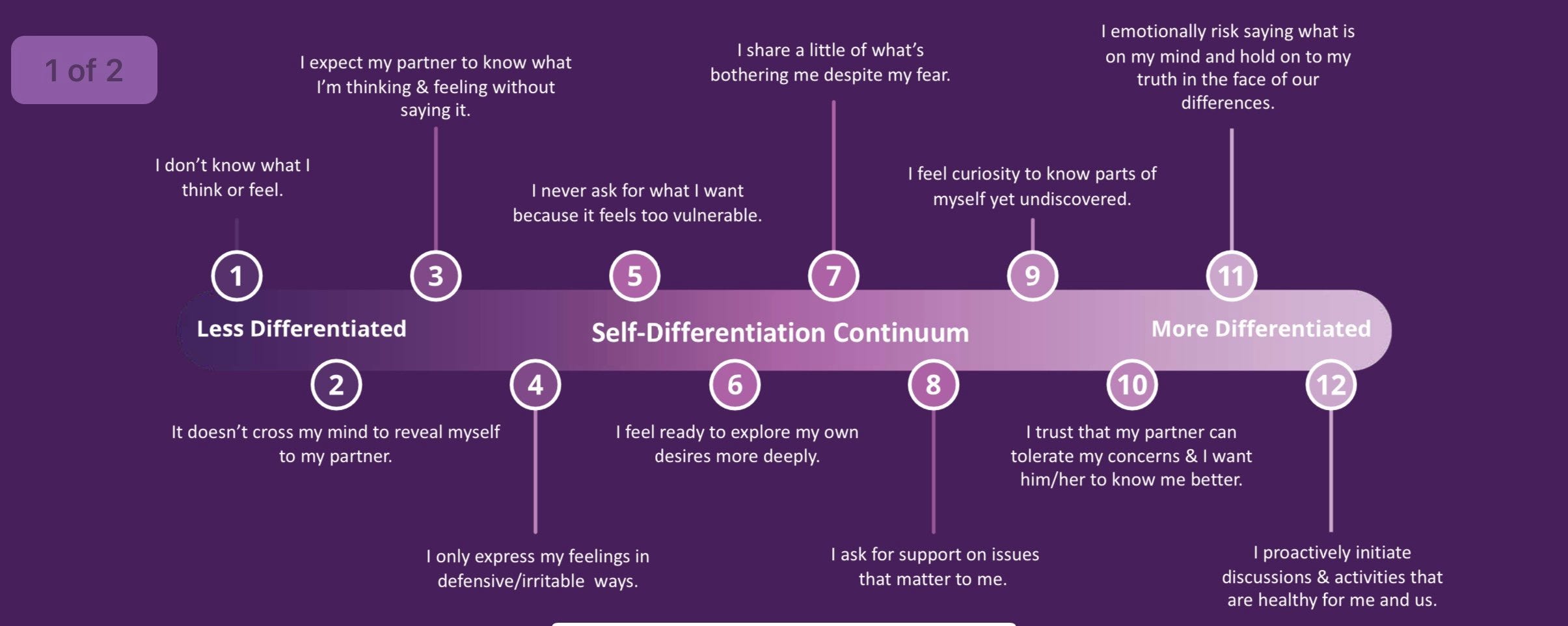
During lecture this week, we are focusing in therapy on approaches to working with couples and the broad concepts of couples work. Much of the lecture was on the idea of how a couple falls in love yet maintains independence, or how two people grow together without fusing or falling away from one another. We discussed it from the Developmental Model of Couples Therapy, and the conversation around it was focused on how we help our patients in clinic who are struggling in relationship, to the extent that is appropriate. It has me reflecting more on the spectrum of being independent and together, of being one unit but also still being ourselves.
How to Use Stainless Steel Tri-Clad Pans
I got my first set of real, quality cooking pans for Christmas last month, and am taking a cooking class weekly on the basic skills of cooking. I already cook and bake quite a lot, but am excited to learn more. Part of that has been figure out HOW to use stainless steel pans (ie, they are most definitely not nonstick if you don’t know how they work).
The Leidenfrost Effect is what I’ve learned first, which has to do with the effect of a vapor level between liquid and a much hotter pan, and helps food items when cooking not stick. Here’s a great video on it (yes, I used to love the shows Mythbusters and Unwrapped).
These are what have been on my mind, reading list, and feelings this week. Tell us what has been on yours, or the most interesting thing you read or learned about this week. I have a feeling we are all looking for recs.
Cheers, and see you soon,
xx, Margaret of Bad Art Every Day
Re: the menstrual cycle. I have been extremely resistant to all things relating to luteal phases and ovulation week and glowing and PMS and that whole world because to me it felt like another way to primalify (word?) and mysticize women into some baser, natury creature ruled by ancient or bodily forces like the moon or blood or "intuition". I know it's not one and the same but it feels like a way to gather up all of a gender and say hey if you are a person who is having periods, you're less rational this one week. You are hotter this week. You are weaker this week. And we try and sweeten the deal by saying it's linked to women's knowledge, intuition, the glow, all this stuff. I am really curious about the scientific side of it but also a little afraid because I really don't want it to be true- it feels like another thing that will be wielded against women, you know?